Google is now rolling out the March 2026 spam update which is expected to take only a few days to complete.
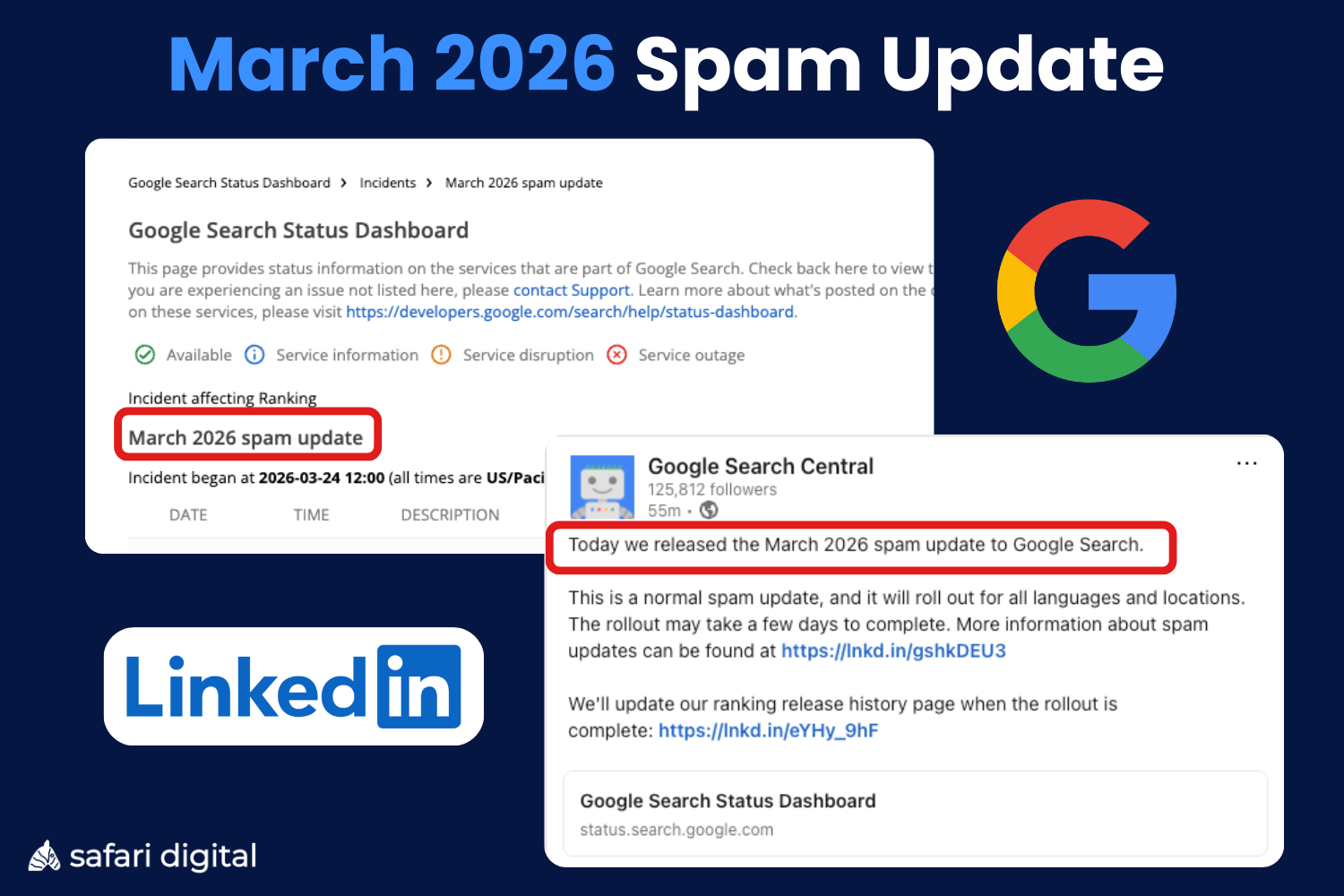
Google updated the Search Status Dashboard at 12:18pm PDT to confirm the “March 2026 spam update” and later announced the update on through the Google Search Central LinkedIn account at 12:20pm PDT in saying:
Today we released the March 2026 spam update to Google Search. This is a normal spam update, and it will roll out for all languages and locations. The rollout may take a few days to complete.
The March 2026 Spam Update is the first spam update of 2026 and follows on from the August 2025 Spam update which was widely regarded as one of the most disruptive Google updates in the last few years. Unlike the August 2025 update which took more than three weeks to complete, the March 2026 Spam update is expected to take only a few days which suggests that we may be in for a bumpy few days in the SERPs.
At this stage, we have no details on the “type” of spam that will be targeted.
March 2026 Spam Update Critical Information
What is a spam update?
Google’s Spam updates reassess the quality of search results at large and enforce spam policy violations such as cloaking, link spam, and content abuse.
Over the last few years, we’ve been getting 1-2 spam updates each year. Historically, spam updates have been heavily associated with link spam. Over the last few years, however, spam updates have been increasingly used to fight the influx of content spam crowding the SERPs as AI-content generation threatens to undermine the quality of Google’s search results.
If your site is affected by the spam update, you have not been hit with a manual penalty. The spam update is a change to Google’s spam detection systems like Spam Brain and mean that your site may have been identified as engaging in practices that breach Google’s spam policies.
If your site is affected, you will not be provided with clarification around why or what is being targeted. It is possible to “recover” from a spam update, but don’t expect it to happen overnight. Based on what we have seen in previous years, the best policy is to go back, assess content, links, and other on-site practices and ensure that you are abiding by Google’s best practices.
Types of spam targeted
Spam updates target on-site and off-site practices that may be seen to breach Google’s spam policies. Some examples of on-site and off-site spam can be found below:
On-site spam examples
Off-site spam examples
All of the examples listed above are taken directly from Google’s spam documentation titled “Spam policies for Google web search”.
History of Google Spam Updates