
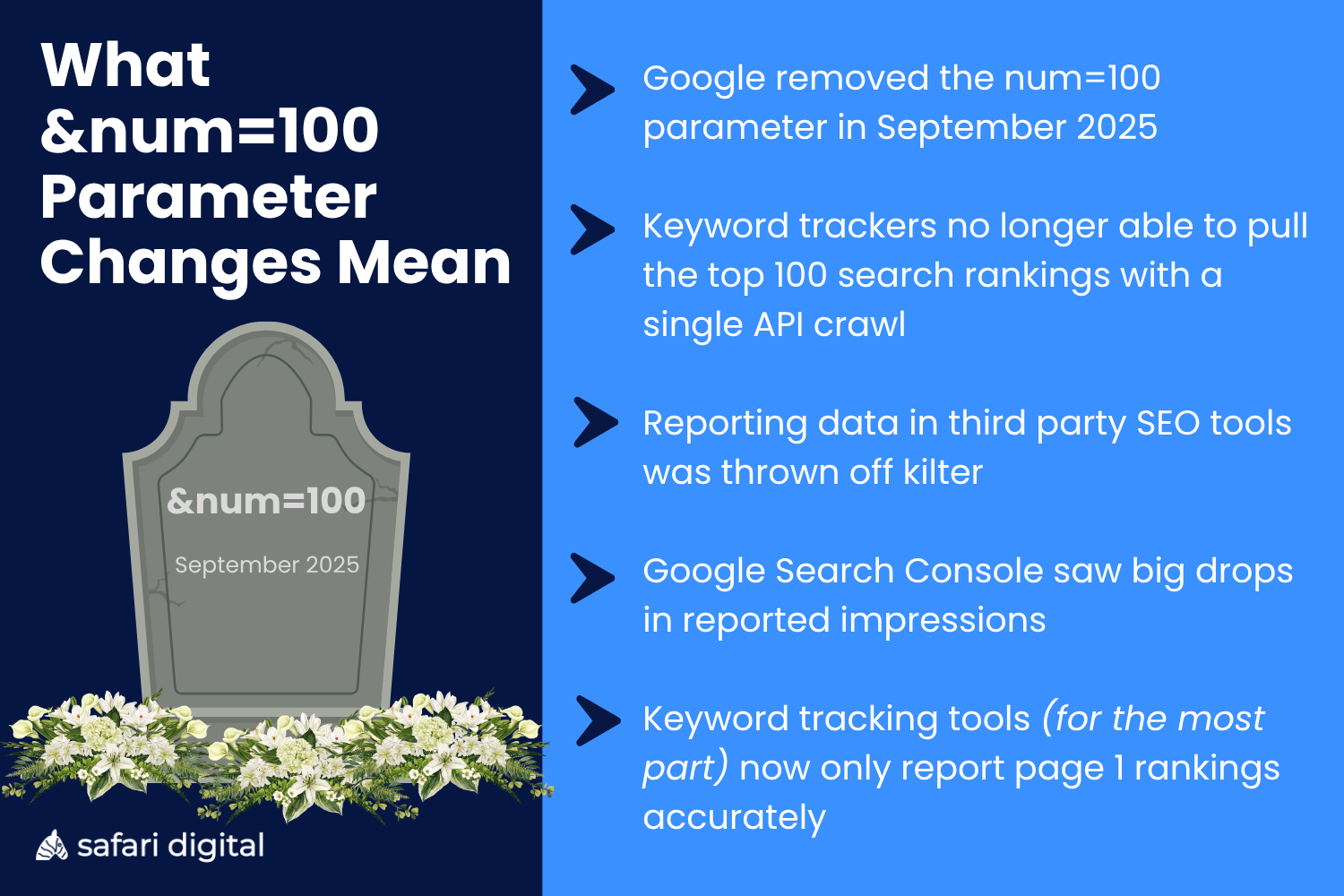
Google removed the num=100 parameter in September 2025 and sent keyword trackers into meltdown.
The &num=100 parameter allowed third-party keyword tracking tools including Ahrefs, Semrush, and all of the other smaller tools to show the top 100 results from Google in rank tracking tools using a single API request.
When Google removed the &num=100 parameter, SEO tools which could previously show 100 results with a single API call now required ten (10 results from 10 pages) to show the same number of results from Google.
As a result, keyword tracking tools had to decide between showing a limited view of keyword rankings or pushing the cost of 10x more API calls onto users.
Most SEO tools – like Ahrefs – decided to limit results to the top 10. For SEO and marketers, this significantly limited visibility and made it difficult to get a sense of keyword progress beyond the top 10 results.
TL;DR – What &num=100 Parameter Changes Mean
What was the &num=100 parameter?
The &num=100 parameter was a URL string that SEO rank tracking tools like Ahrefs, SEMrush, Serprobot, and others applied to pull the top 100 search results using a single API call.
These rank tracking tools relied on the &num=100 parameter to pull the top 100 search results using single API call. For anyone using keyword trackers, the &num=100 parameter meant getting a consistent, accurate view of the top 100 search results for any given keyword. For SEO tools, the &num=100 parameter allowed them to deliver cost-effective rank tracking tools for what (is now) considered a very affordable rate.
The fallout from removing the &num=100 parameter
The immediate fallout when Google removed the &num=100 parameter was confusion as SEO tools lost the ability to report accurate data.
Shortly after SEO tools started to go into meltdown, Google explained that the &num=100 parameter had been removed and that was what was causing the data in keyword tracking tools to be distorted/incomplete.
Here is what the fallout looked like in practice:
Keyword tracking tools needed to make a decision
Keyword tracking tools needed to choose between reducing the data visibility down to the top 10 results (which is all that could be pulled without the &num=100 parameter) or increasing costs to the user in order to maintain the same level of service (showing the top 100 search results).
Google Search Console Data Changed
Google Search Console saw big drops in reported impressions. This isn’t because users suddenly disappeared, but because many of those “impressions” were actually inflated by bots and rank tracking systems who crawl and give impressions. Now that those bot-based impressions are no longer counted, the data will look very different. The flip side of this is that average position data reported in Google Search Console rose sharply, indicating the lost impressions were from lower ranked pages (e.g. not page one), supporting num=100
Keyword trackers/SEO tools have not been as upfront as they could have been
One of the biggest issues with the changes to the &num=100 parameter was that keyword tracking tools and SEO tools have not been completely transparent.
Many of the tools have not made changes to the way that they track and report data which causes serious problems when tracking historical performance.
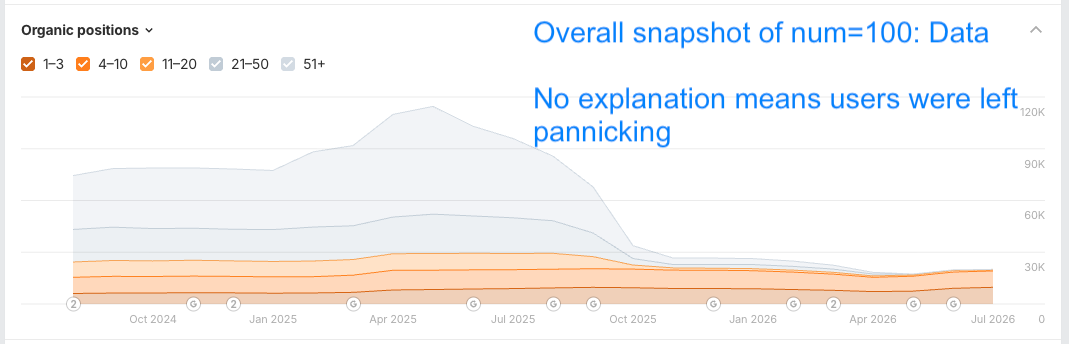
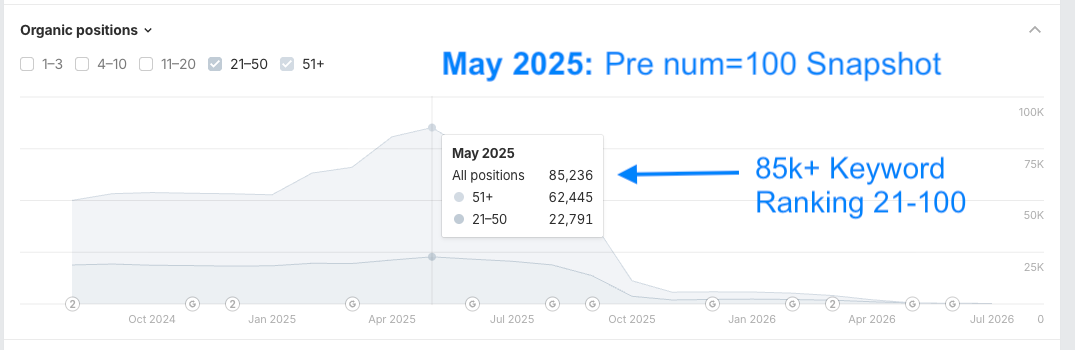
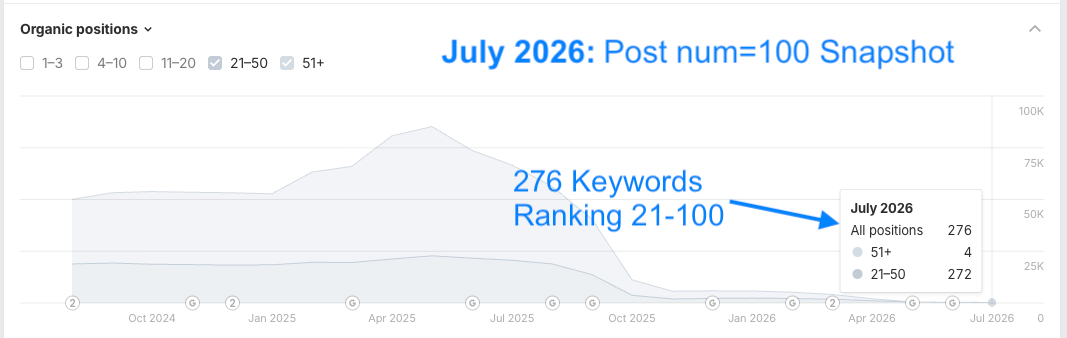
Take for example Ahrefs keyword tool. In the image below, it looks like this website has lost a significant number of “ranking keywords”. But when we break down the data, we can see exactly what has happened. The number of “ranking keywords” in the top 10-20 has remained almost unaffected. On the flip side, all of the data beyond #20 is a mess because Ahrefs is no longer pulling this data in every search refresh.
Overall data in Ahrefs pre and post num=100 Parameter changes
Pre num=100 Parameter snapshot of keywords ranked 21 to 100
Ahrefs Data Showing changes to keyword tracking for keywords ranked 21+ after the num=100 Parameter change
Top 10 keyword data remains virtually unchanged after the num=100 Parameter change
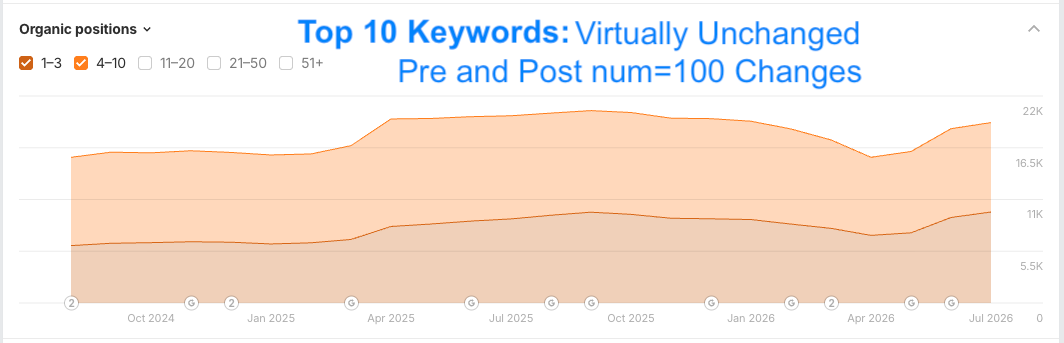
Here’s the thing, there’s no issue with Ahrefs and other SEO tools not showing this data.
It’s fine – we can do without it.
The issue is that they did not release a statement explaining to users why this was the case.
This is particularly important for those who use Ahrefs more casually. Anyone outside of the SEO community would not have heard about changes to the &num=100 parameter and naturally when they look at the graph in their dash they would be concerned.
SEO tools owe users a greater level of transparency on what these changes mean. If they are no longer tracking the top 100 results, then that’s fine – but they need to be clear to users about what that means for reporting. Even today – as we can see in the image above – Ahrefs is showing the same data set without explaining why it looks so vastly different.


