AI Images have become commonplace on websites.
For many businesses, AI images are a cheap way to populate a website and create an air of legitimacy without hiring a graphic designer.
But do AI images do more harm than good, and could they be impacting your SEO?
In this article, we’ll look at what Google says about the impact of AI images on SEO and whether you should be using (or avoiding) AI images on your website.
TL;DR – AI Images & SEO
What Google Says About AI Images & Potential SEO Impacts
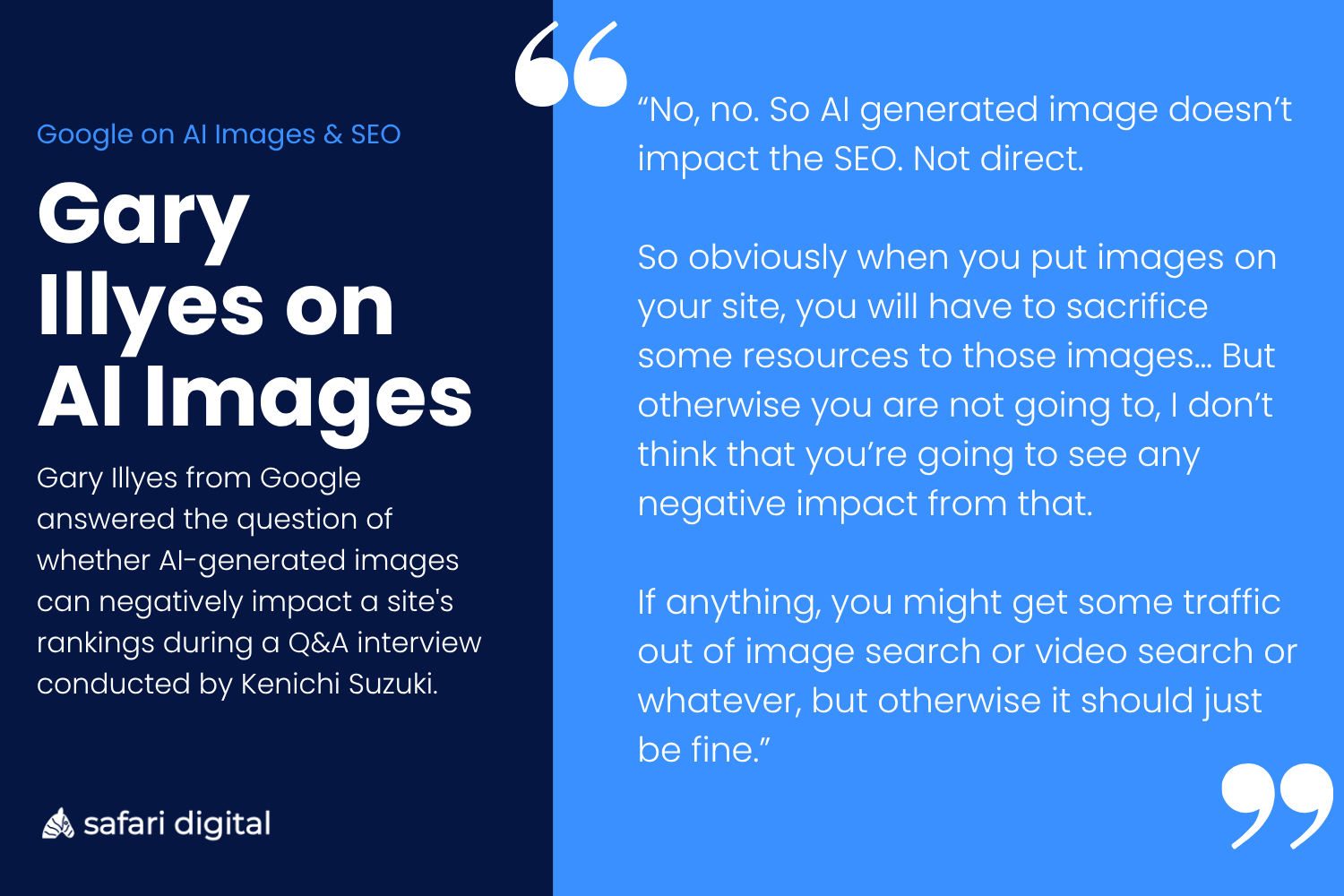
Gary Illyes, a well-known Analyst on the Google Search team, answered the question of whether AI-generated images can negatively impact a site’s rankings during a Q&A interview conducted by Kenichi Suzuki, published on YouTube in August 2025.
The question posed was whether a legitimate, valuable piece of content which was human-written would be impacted if it were complemented with AI-generated images. Illyes dismissed the idea and said that AI-generated images may even bring in extra traffic through image search.
Here’s what Gary Illyes from Google said on the subject of AI images and SEO:
“No, no. So AI generated image doesn’t impact the SEO. Not direct.
So obviously when you put images on your site, you will have to sacrifice some resources to those images… But otherwise you are not going to, I don’t think that you’re going to see any negative impact from that.
If anything, you might get some traffic out of image search or video search or whatever, but otherwise it should just be fine.”
Watch the below video from the 9min49sec mark below where the question is asked:
So, Are AI Images Fine for SEO?
Well, if we take what Gary Illyes said at face value, then AI images may not have a direct, negative impact on your SEO and in some cases may even be beneficial.
But is that the truth?
From our reckoning and experience, it is a little bit more nuanced than that.
AI images are pervasive.
If you spend more than a few minutes scrolling through social media, then you are sure to be greeted with an AI-generated image advertisement. Gary Illyes answered this question back in August 2025 when AI images were far less prominent.
For most people, social media is their most direct exposure to AI generated images. Even though these same businesses may be using AI images on their website, social media is likely to be the first exposure that customers get when looking at these brands/businesses.
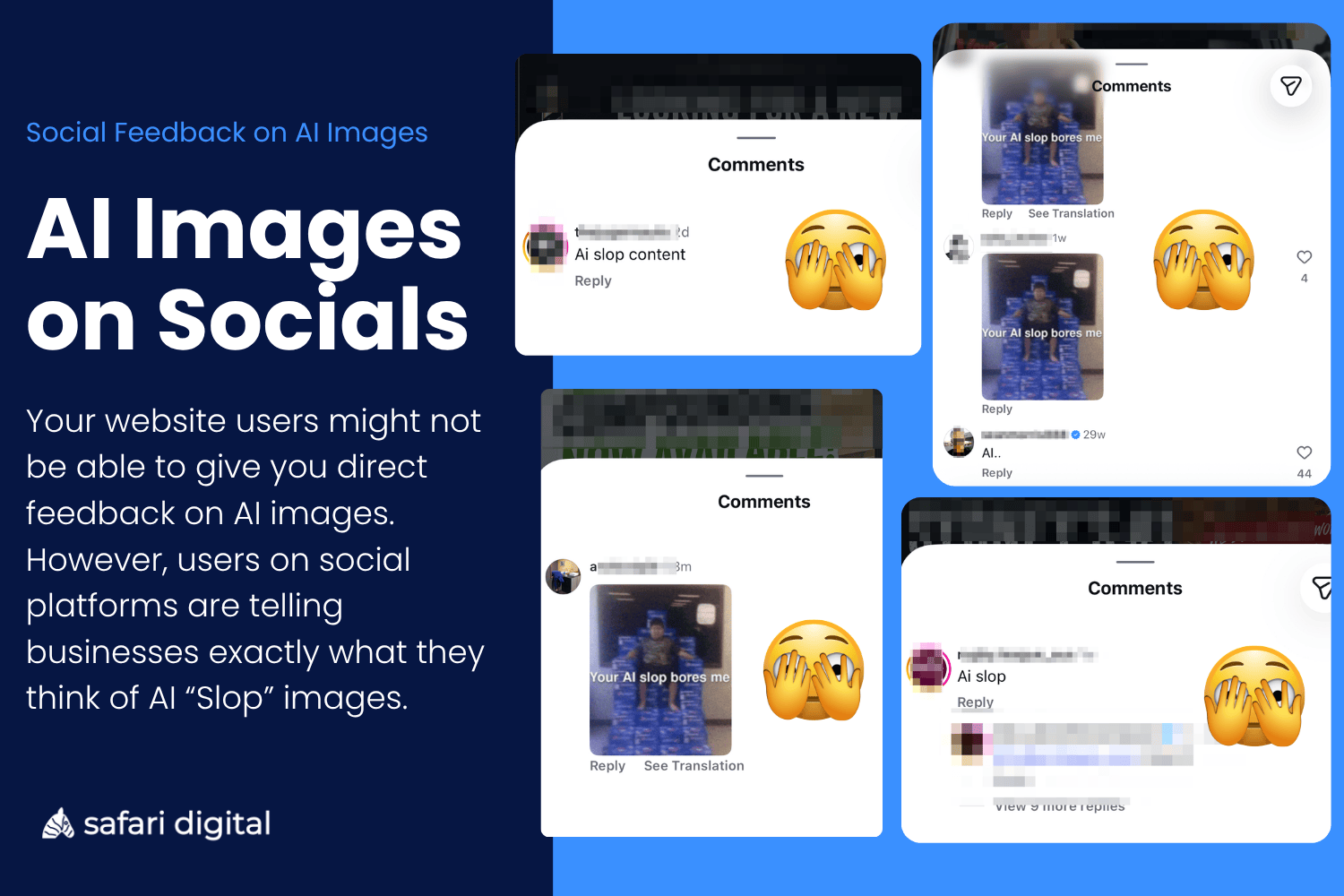
One of the most important things to take away from AI images on social media is that users – by and large – do not like them. The image below is a small cross-section of the kind of comments that users left of social media posts that were created using AI generated images.
Why is Social Media Commentary Important for AI Images?
Well, it’s important because social media provides direct feedback from users.
If a user goes to a website, sees an AI generated image and clicks away from the website you do not know why they clicked away. Google Analytics doesn’t provide you that sort of data. Similarly, there is not feedback section on your website where users can tell you what they think of AI generated images.
On social media, however, brands are hearing directly from consumers about they feel about AI generated images. On your website, it could just be an unexplained bounce, on your social media, it could be a scathing comment.
Indirect SEO Impact of AI Images
Final thoughts – AI Images and SEO
AI-generated Images are the new stock images. Cheap, low barrier to entry, and low trust with users.
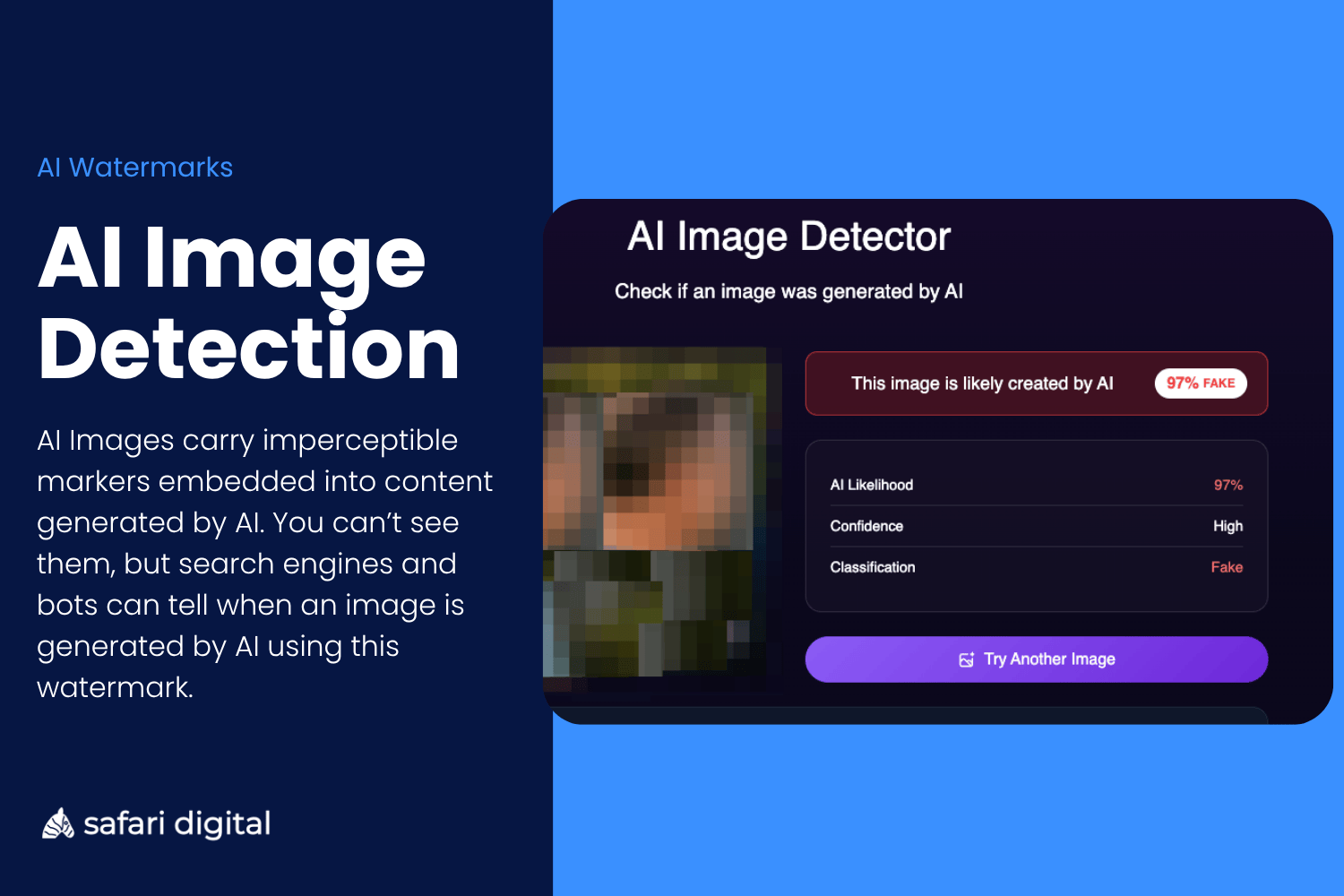
Even if AI generated images do not have a direct impact on SEO – which is still open for debate – they can still have a myriad of indirect, negative impacts on your SEO.
The most accurate commentary that brands are getting around AI-generated images is coming from social media posts. Users can’t leave comments on your website, but where they can (on social media), they are telling brands how they feel about AI generated images.
In our reckoning, using AI-generated images can erode trust with users, compromise brand trust, and cause indirect SEO issues such as increased bounce rate.