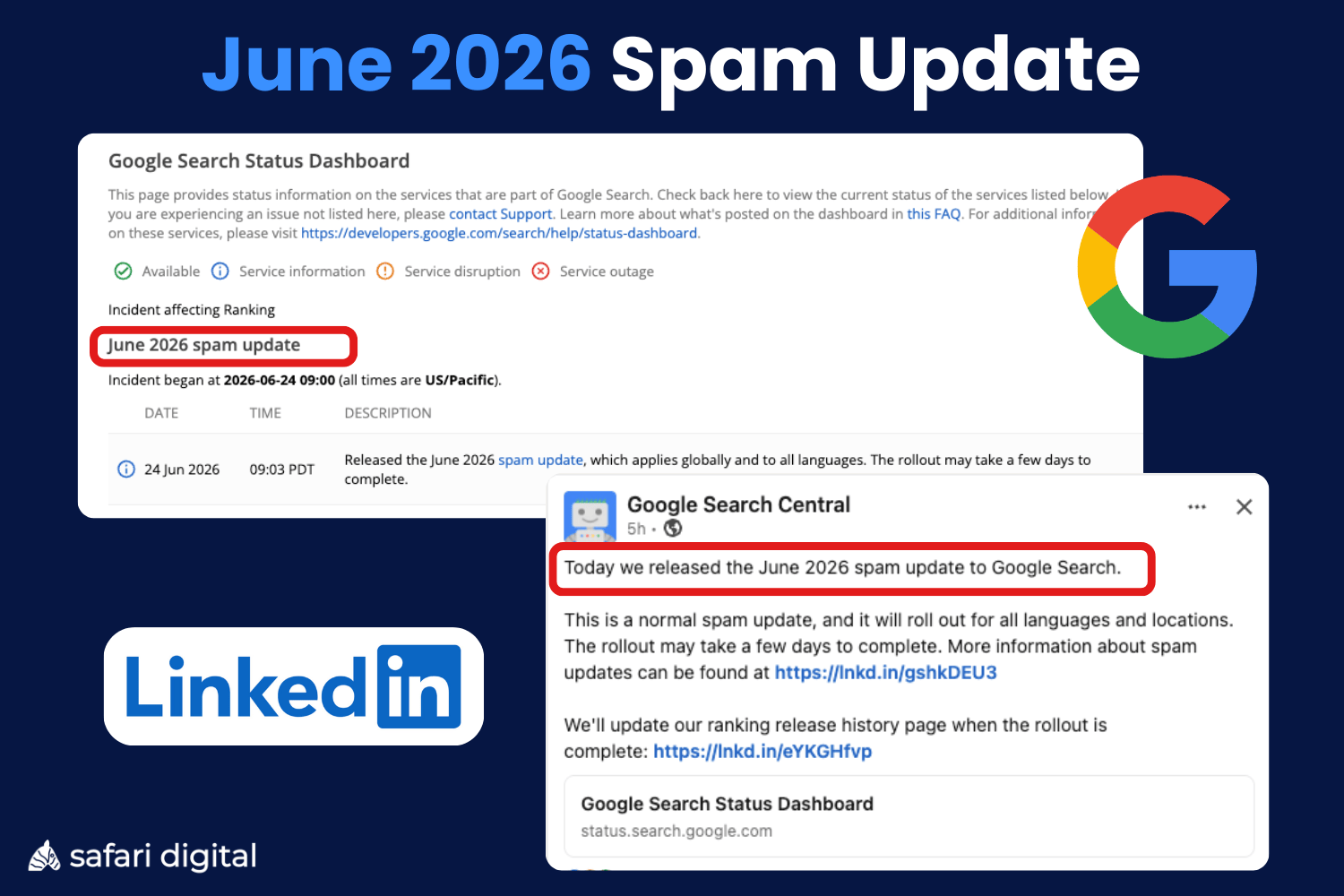
The June 2026 Spam Update was announced on 24 June 2026 and finished rolling out two days later on 26 June 2026. Compared to the March 2026 spam update, this one was far more mild/less disruptive to SERPs.
Google’s June 2026 spam update comes just over a month after the May 2026 Core Update and just over three months since the (extremely volatile) March 2026 Spam Update.
As is now tradition, the update was first announced through the Google Search Central LinkedIn account which directed users to the Google Search Status Dashboard where they can track the progress of the update:
“Today we released the June 2026 spam update to Google Search.”
“This is a normal spam update, and it will roll out for all languages and locations. The rollout may take a few days to complete.”
June 2026 Spam Update Key Facts
What is a spam update?
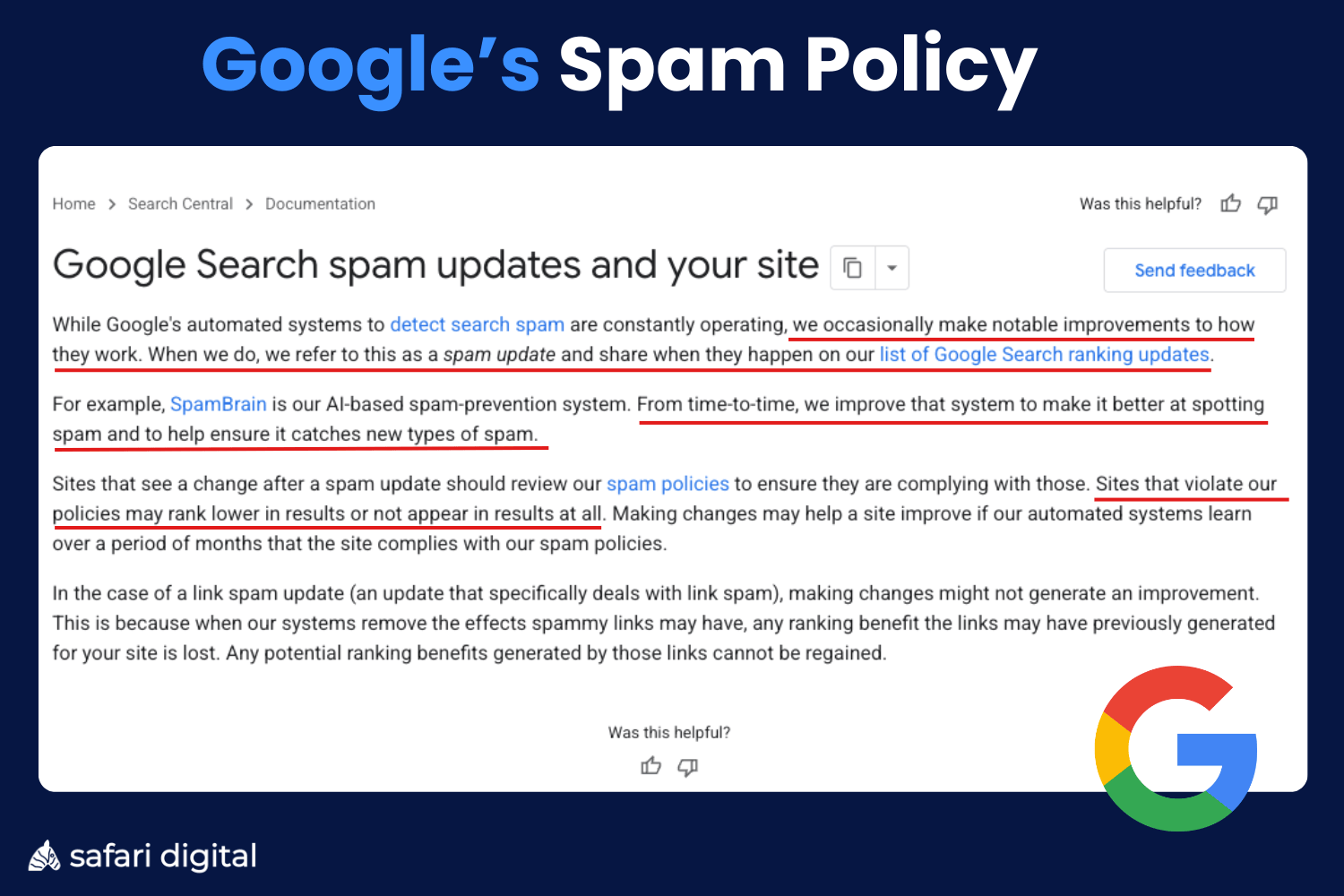
A spam update occurs when Google makes a notable change/improvement to their automated spam detection systems – including its AI-based system SpamBrain. These updates are intended to catch new types of spam and implement new systems that can effectively remove and prevent this type of spam from the SERPs.
Google advises that any changes to rankings through a spam update can occur due to a violation of any one of its spam policies. According to Google, recovery can take months. From what we have witnessed for ourselves in the SERPs – this timeline can be much longer and even when rankings are “restored” they may never return to their previous position.
Spam updates can target a range of different on-site and off-site spam. Some of the most notable types of spam, include:
On-site spam examples
Off-site spam examples
How is a spam update different to a core update?
Core updates are recalibrations of Google’s search ranking systems. They are not intended to catch out spam per say (although they often do). They are intended to change ranking systems and shift the way that certain elements are weighted in order to provide the best possible search results for users.
Spam updates, on the other hand, are intended to catch out websites that are wilfully engaging in spam tactics to manipulate search results. Over the last 12-months, a lot of the web spam has been content violations – AI content, low value content, programmatic SEO etc. Spam updates are intended to weed out these violations and ensure they are not surfaced to users.
What should you do if your site is affected by the spam update?
The first thing to understand is that a change to your rankings does not mean your site has been manually penalised. Instead, it means that Google has improved its automated spam-detection systems, and tactics that were previously benefiting your site are no longer working or are now being actively discounted.
Spam updates can be volatile and take weeks to roll out. We recommend that you wait until the update is finished before making any major changes. Once the update is complete, try to understand what has happened by looking at patterns on your own website as well as competitors.
TLDR June 2026 Spam Update Summary
June 2026 Spam Update Wraps Up After 2 Days
The June 2026 Spam update was followed by the August 2026 spam update on 18 August 2026 – less than two months since the June Spam update.
History of Google Spam Updates