The SEO community is rife with misconceptions, myths, and down right misinformation.
After more than a decade in the industry, we have compiled a list of 10 of the most common SEO myths that need to be debunked and busted.
SEO Myth #1: Exact match domains (EMDs) don’t help SEO
Myth: Exact match and partial match domains do not help SEO performance
This is (to us) one of the biggest misconceptions in the SEO industry.
Spend any time on LinkedIn and you’ll see SEO professionals claiming that Exact and Partial match domains don’t have an impact of SEO performance – but this couldn’t be further from the truth.
Back in 2012 Google released the exact match domain SEO update which was intended to reduce the prominence of EMDs as a ranking signal. And while the update was somewhat effective at reducing the prominence of exact and partial match domains, it didn’t change things as drastically as what many people think.
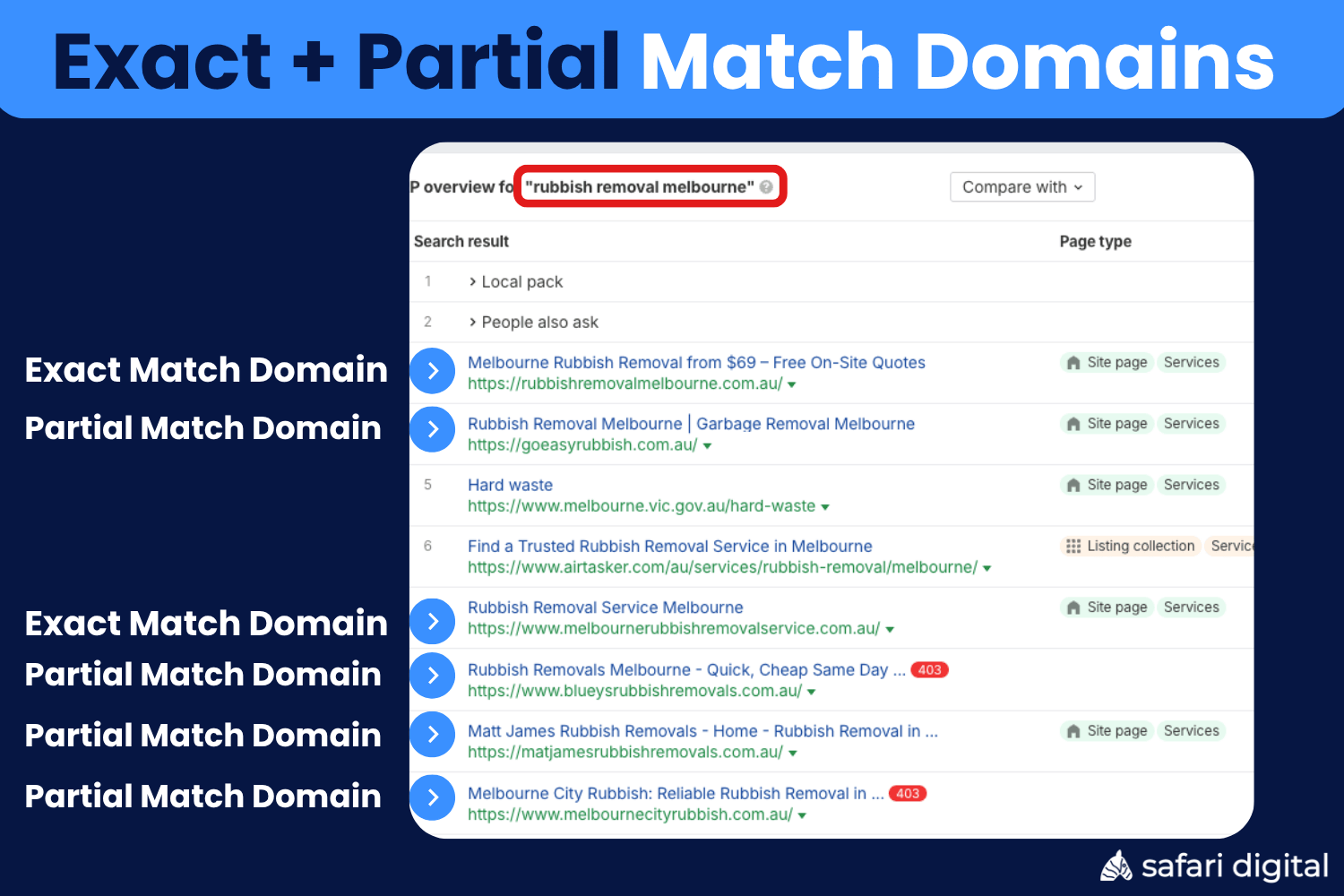
Exact and partial match domains continue to provide significant SEO advantages. While they limit your ability to scale beyond a specific service or location when you use them in your domain name, the SEO benefits for EMDs and PMDs cannot be dismissed or mitigated – they still provide a notable advantage when used currently.
SEO Myth #2: Keyword density is an SEO ranking factor
Myth: Keyword density (the number of times you use your keywords on the page) is important for SEO performance.
Keyword density or the number of times that you use your exact keyword in content is not an SEO ranking factor. Popular SEO tools and plugins have played a role in perpetuating this myth over the last few years by effectively encouraging publishers to add more keywords to their content in order to improve their “content score”.
The reality is that keyword density is not an SEO ranking factor. Keywords littered throughout your content with the intention of manipulating SEO rankings can, more often than not, have a negative detrimental effect on rankings.
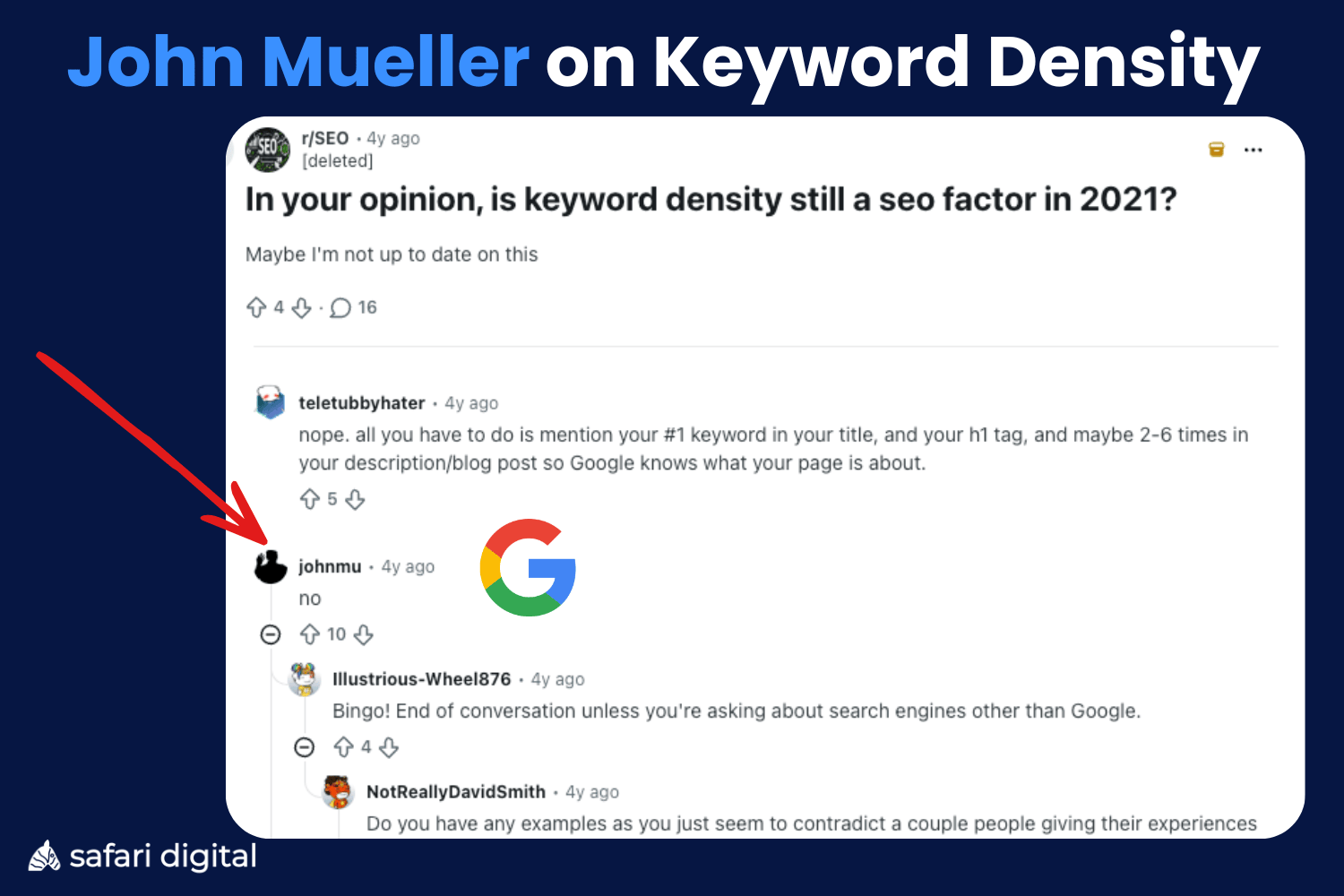
Responding to a Reddit post back in 2021, Google’s Search Advocate John Mueller confirmed that keyword density was not an SEO ranking factor when he replied simply to a question of whether keyword density was a ranking factor:
“No” – John Mueller (Google Search Advocate)
SEO Myth #3: Site speed is one of the most important ranking factors
Myth: Having a slow website prevents you from ranking well in the organic search results.
So there is some truth to this one, but it’s not as clear cut as people may think.
A slow website can hamper your SEO performance. Data shows that website’s that take longer than 3-seconds to load have an 80% higher bounce rate than those that load in under 2-seconds – that’s not up for dispute.
However, it is important to clarify that while site speed is important for creating a positive user experience, it is not one of the most important SEO ranking factors.
Google have made steps in recent years to reward and incentivise websites to be faster including the Google Page Experience update back in 2021.
That said, it’s important to clarify that chasing a perfect score in Core Web Vitals is rarely worth the effort. It’s important to have a site that is functional and loads reasonably quickly, however, it is also entirely possible to have a slower website and still rank well. Do a Core Web Vitals test on just about any set of page 1 results and you’ll find more than a few of those websites are slow to load.
Yes, a fast website is good for users and should be something to work on. However, it is not the silver bullet that many think it is when it comes to improving SEO performance.
SEO Myth #4: Domain Authority/Domain Ranking is a ranking factor
Myth: Domain Authority (DA), Domain Ranking (DR) are important ranking signals for Google to determine rankings.
Domain Authority (DA) by Moz and Domain Rating (DR) by Ahrefs are the two most common metrics that people cite when referring to domain strength. In fact, almost every SEO tool including Majestic, Semrush, and plenty of others all have their own version of DA/DR.
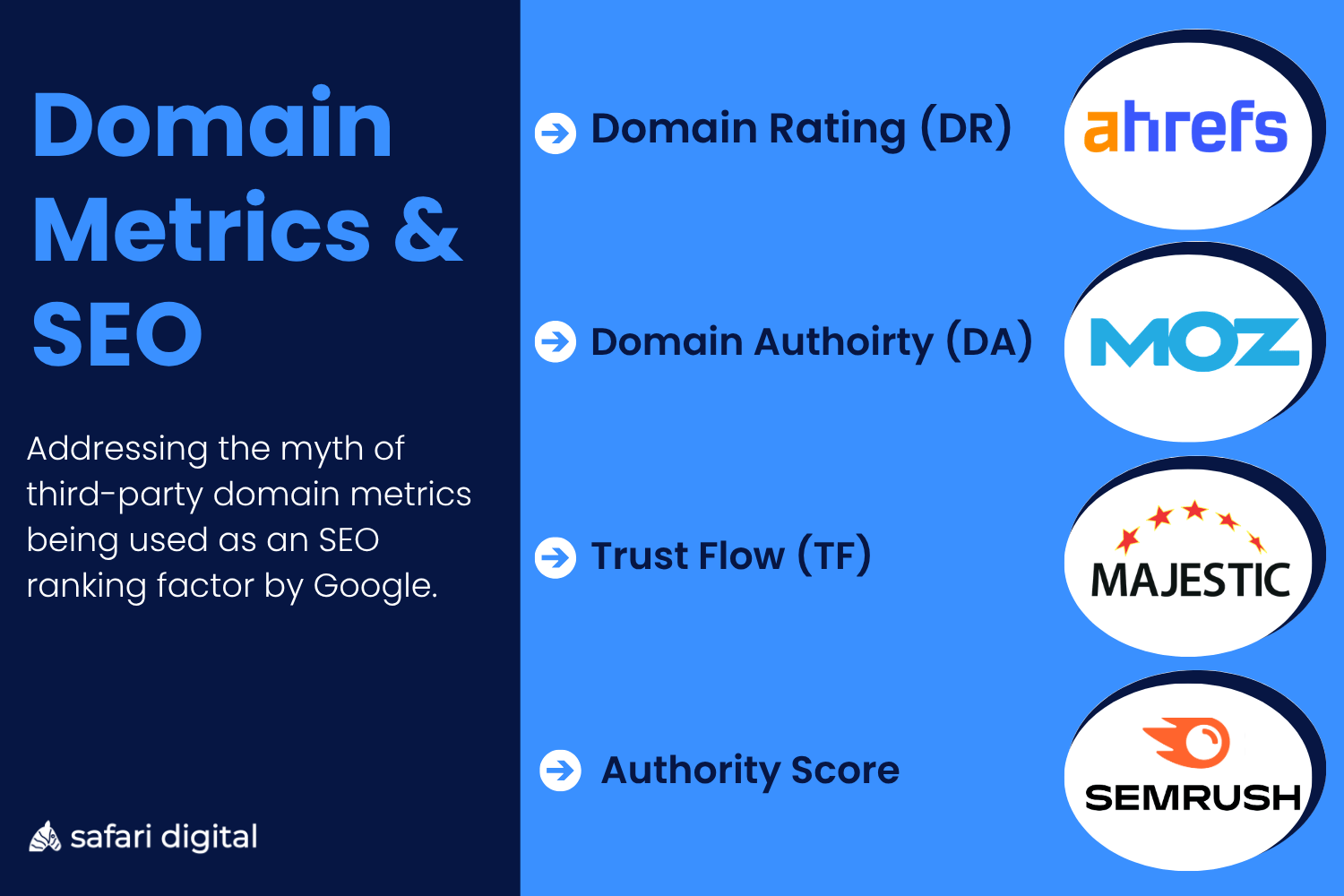
For all intents and purposes, all of these metrics perform a very similar function. They are intended to mimic Google’s defunct PageRank (PR) metric to determine the ranking power of a website based on its backlink profile.
In essence, the more high authority links that point to a website, the higher the DA/DR. There are nuances to this, but the purpose is similar – provide website owners with a sense of their domain strength based on their backlink profile.
The one thing that all of these tools have in common is that they are not an SEO ranking factor and they are not used or considered by Google when determining rankings.
The confusion usually comes from the correlation between a high DR/DA and high rankings – but this is simply a by-product of links. A high DR/DA does not automatically equal strong SEO performance and vice versa.
SEO Myth #5: Meta descriptions are an SEO ranking factor
Myth: Keyword rich meta descriptions can improve SEO rankings and performance
Meta descriptions are not an SEO ranking factor – a fact that was confirmed by Google’s Search Advocate John Mueller as recently as April 2022. In response to a question in an SEO Office Hours Session, John Mueller stated:
“The meta description is primarily used as a snippet in the search results page. And that’s not something that we would use for ranking.”
There is a caveat to this because John Mueller did elaborate on the question by saying:
“Having a good snippet on a search results page can make it more interesting for people to actually visit your page when they see your page ranking in the search results.”
And, before we race ahead of ourselves, there is an even more important caveat to this:
Google rewrites meta descriptions 70-80% of the time. Essentially, Google rewrites meta descriptions according to intent. The same page may generate a different meta description for different users based on the search intent because Google is fetching relevant information from the web page to surface as a meta description to show the user.
SEO Myth #6: LLMS.txt is important for ranking in LLMS
The concept of an LLMS.txt file was first proposed back in 2024. The intention was to create a simplified markdown-formatted file (like a robots.txt) that would help LLMS like ChatGPT, Perplexity, Claude, Gemini etc. to access and crawl site content.
Since then, some well-known tools like Yoast have been adding a one-click option to add an LLMS.txt file to websites, while others have scrambled to create one manually.
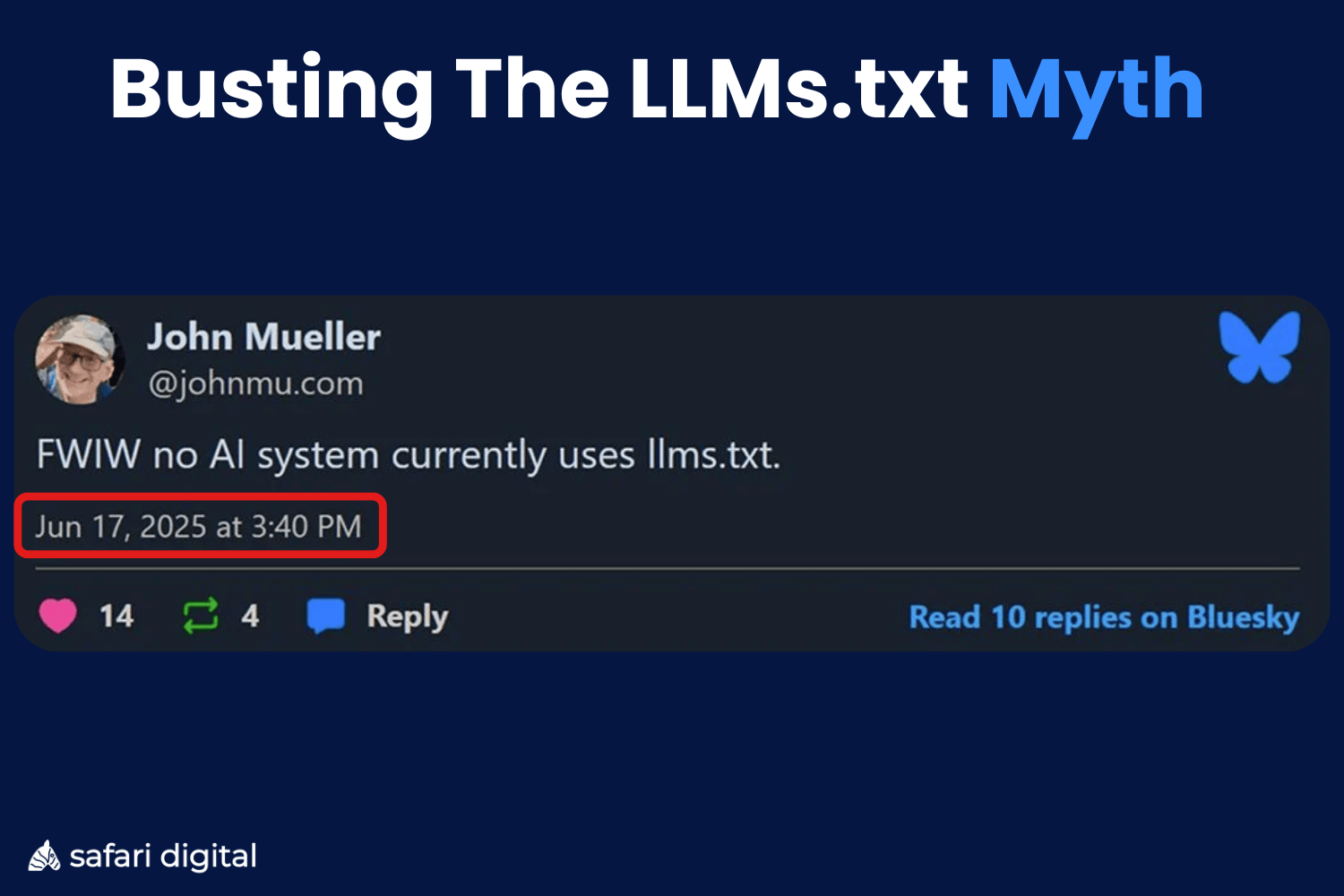
The thing to understand is that the LLMS.txt file is a proposed standard – it’s not actually used by LLMs. It might be in future – who knows, but right now it’s not used by LLMs and there is no benefit in having one.
SEO Myth #7: Image Alt Text is an SEO ranking factor
Myth: Specifying Alt Text improves SEO performance because it provides context for images
Just like meta descriptions, Image Alt Text is not an SEO ranking factor.
Here is what Google’s Search Central Advanced SEO document says about image alt text:
“Google uses alt text along with computer vision algorithms and the page’s contents to understand the image’s subject matter.”
The thing worth specifying here is that image alt text is not used to determine on-page rankings. Specifying Image Alt Text may improve rankings for specific images (in the image tab of Google) but it will not improve SEO rankings for the pages where those images appear.
SEO Myth #8: Schema Markup is an SEO ranking factor
Myth: Adding Schema Markup to web pages improves rankings
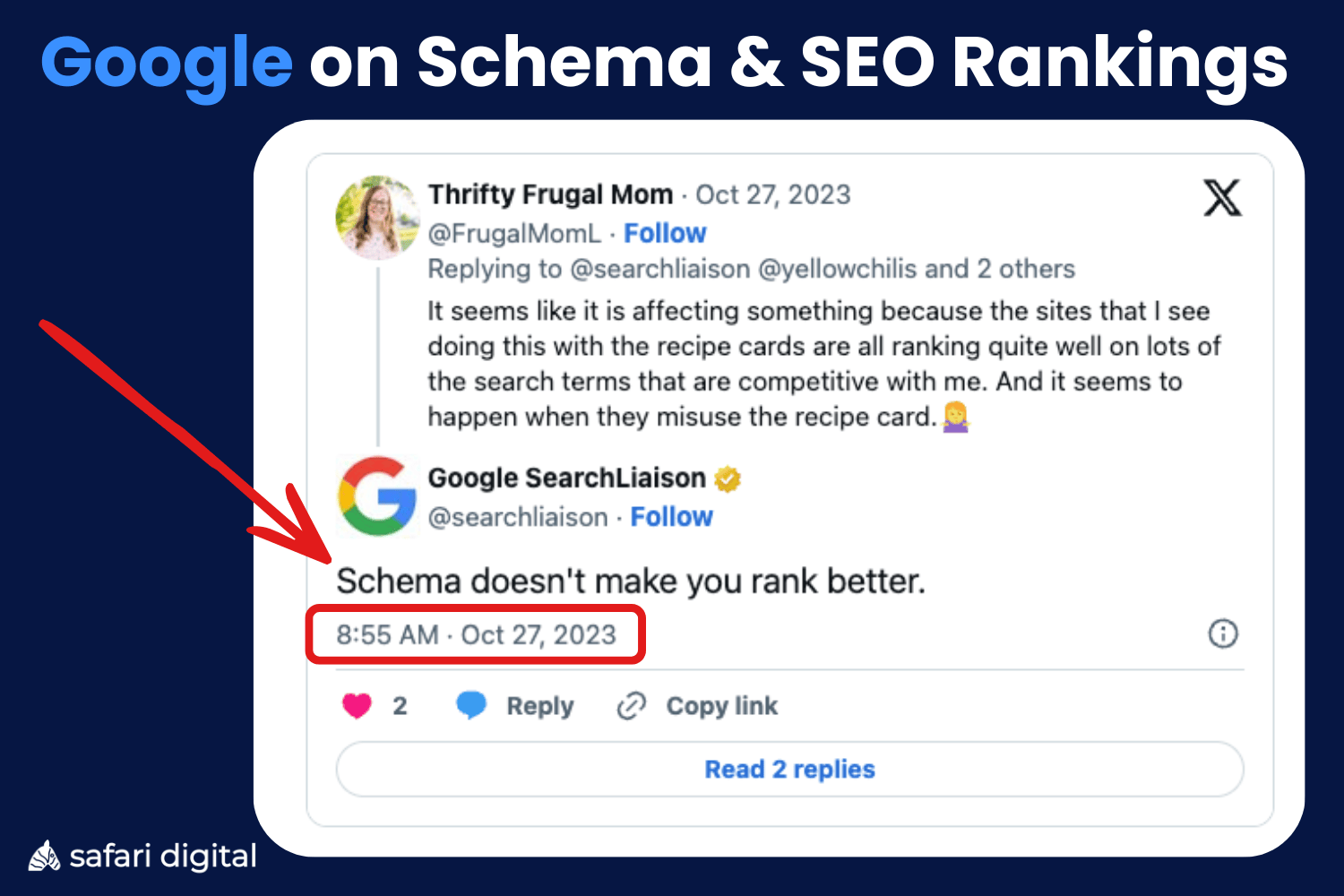
As far as “hot takes” goes – this is probably the hottest on the list – although it really is not a hot take at all because Google has confirmed – on multiple occasions – that schema markup does not improve SEO rankings.
Adding Schema Markup to your web pages is not an SEO ranking factor.
Google’s Public Liaison for Search Danny Sullivan said the following when asked about whether Schema Markup was an SEO ranking factor:
“Schema has nothing to do with rankings, so if something is violating our schema guidelines, that has no impact on ranking because … schema wasn’t involved in the ranking in the first place. We look at other factors to determine rankings. But it may cause a site to no longer be eligible to have schema enhancements.”
SEO Myth #9: AI generated content can rank just as well human written content
Myth: AI generated content is just as capable of performing well as human written content.
AI generated content has been one of the biggest sticking points in the SEO community over the last few years. Some SEOs believe that AI generated content can perform just as well as human-written content, while others (like us) have seen first-hand how detrimental AI-generated content can be for SEO performance.
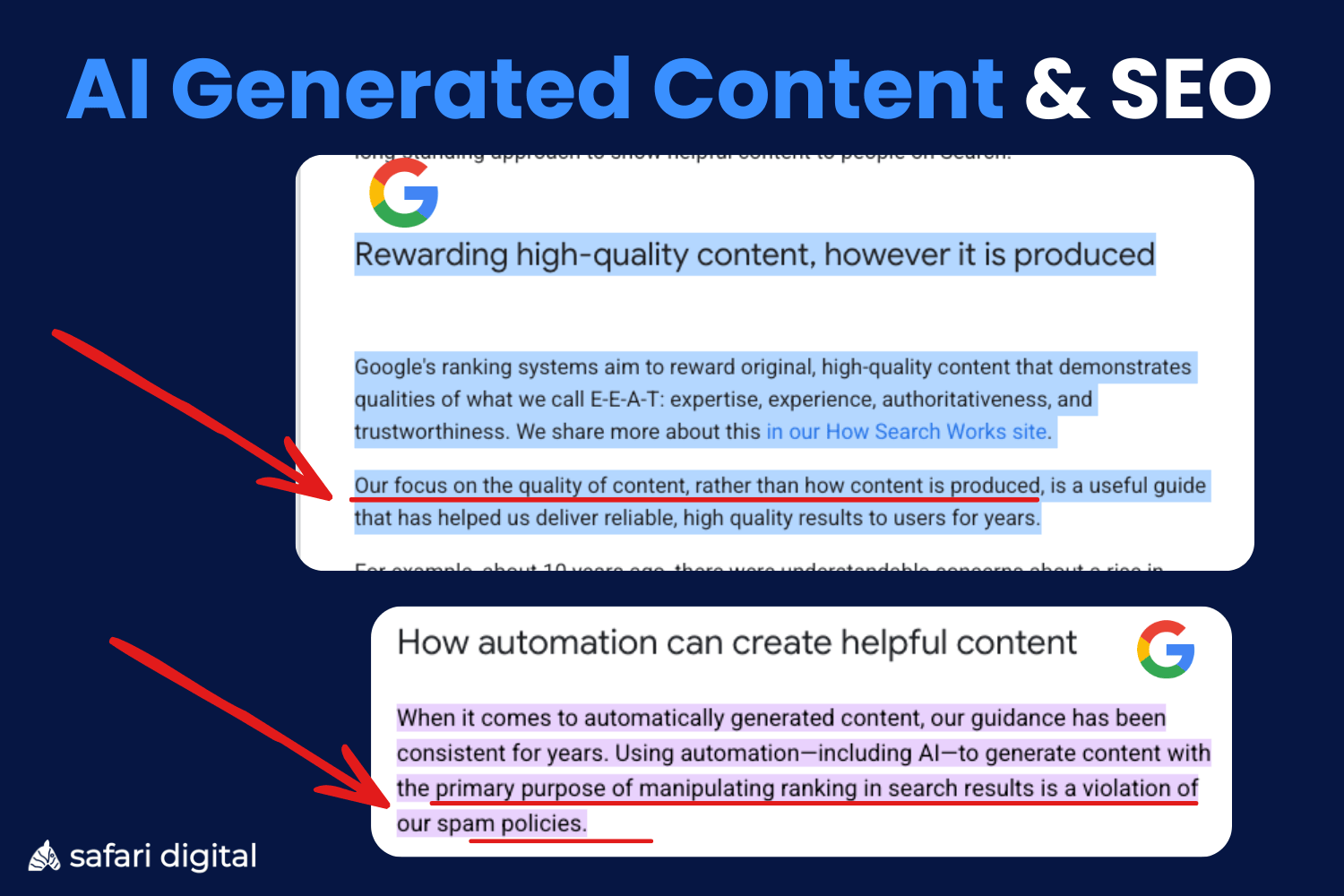
To clear things up, it’s important to address that Google’s guidance has recently changed on this and now mentions that the way content produced is secondary to providing helpful content.
Here’s what Google’s Search guidance about AI-generated content says about AI content as of 2026:
“As explained, however content is produced, those seeking success in Google Search should be looking to produce original, high-quality, people-first content demonstrating qualities E-E-A-T.”
Here is one website that we consulted with who came to us in mid 2024 after publishing 3,000+ AI generated pieces of content to their website.
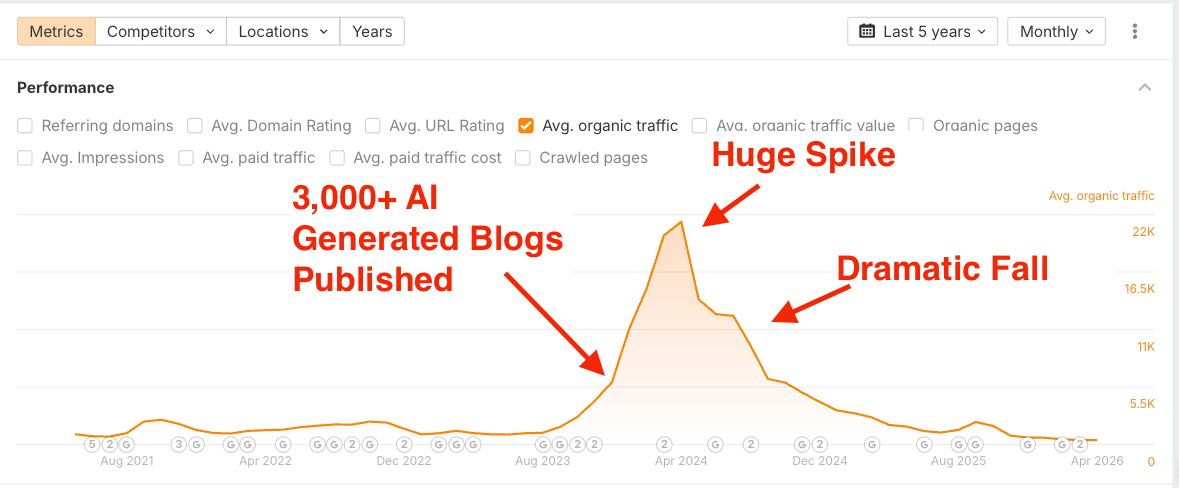
This is what we call the AI-content shake:
- At first, articles are indexed, traffic spikes, things look great.
- Fast forward two months, Google catches on to the nature of the content (Low quality, AI-generated) and the traffic begins to decline.
- Fast forward 6 months and the website has completely capitulated. ~70% of AI-generated articles have dropped out of index, pages that were previously performing well – usually transactional pages, have now crashed and the whole website is on its knees.
Google’s guidance is that AI-generated content, so long as it is helpful, can perform well. While this may be true, we are yet to see a website that has consistently performed well using this approach. Our guidance to clients and our own approach on the matter of AI-generated content is that the risks far outweigh the rewards.
SEO Myth #10: Continually making small tweaks to content can boost rankings
Myth: Google rewards web pages that are constantly being tweaked
There is a common myth that making small updates to a web page to provide it with a new “recently updated” or “last updated” date can help your rankings by virtue of search engines believing that your content must be fresh.
To address the elephant in the room, it’s important to acknowledge that this “SEO hack” was somewhat effective right up until 2023. Like all good things, tweaking content with small updates to give the impression of freshness abruptly came to an end thanks to the September 2023 Helpful Content Update which addressed Faking freshness.
Google’s updated guidance was as follows:
“Are you changing the date of pages to make them seem fresh when the content has not substantially changed?”
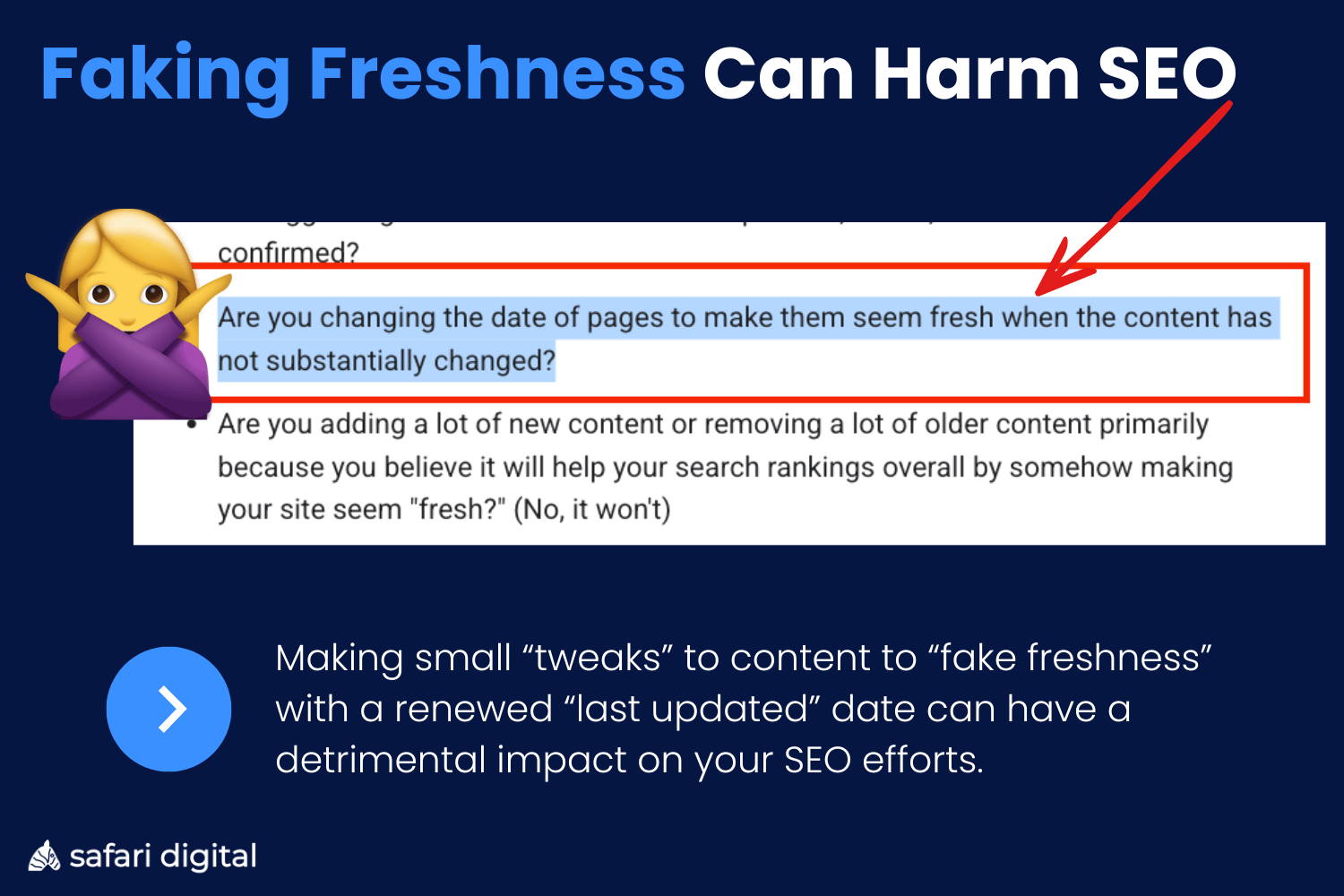
In essence, this SEO loophole was patched overnight. Websites that were continually making small tweaks to content to bluff freshness started to see a detrimental impact on rankings – so much so that downloads of a WordPress plugin for blocking website “Last Update” status skyrocketed.