The concept of keyword density and finding an ideal keyword usage to word count ratio has been floating around the SEO community for the better part of two decades.
In that time, SEO has changed dramatically. Google has become better at understanding context and semantics. However, in spite of everything, the notion of keyword density (that’s usage #2 for those keeping count) has stuck around.
In this article, we’ll look at the concept of keyword density (#3!), dispel myths, and provide context for those looking to write for humans and algorithms.
Table of contents
What is keyword density?
Keyword density is a percentage ratio used to calculate the number of times that a keyword has been used within a piece of written content.
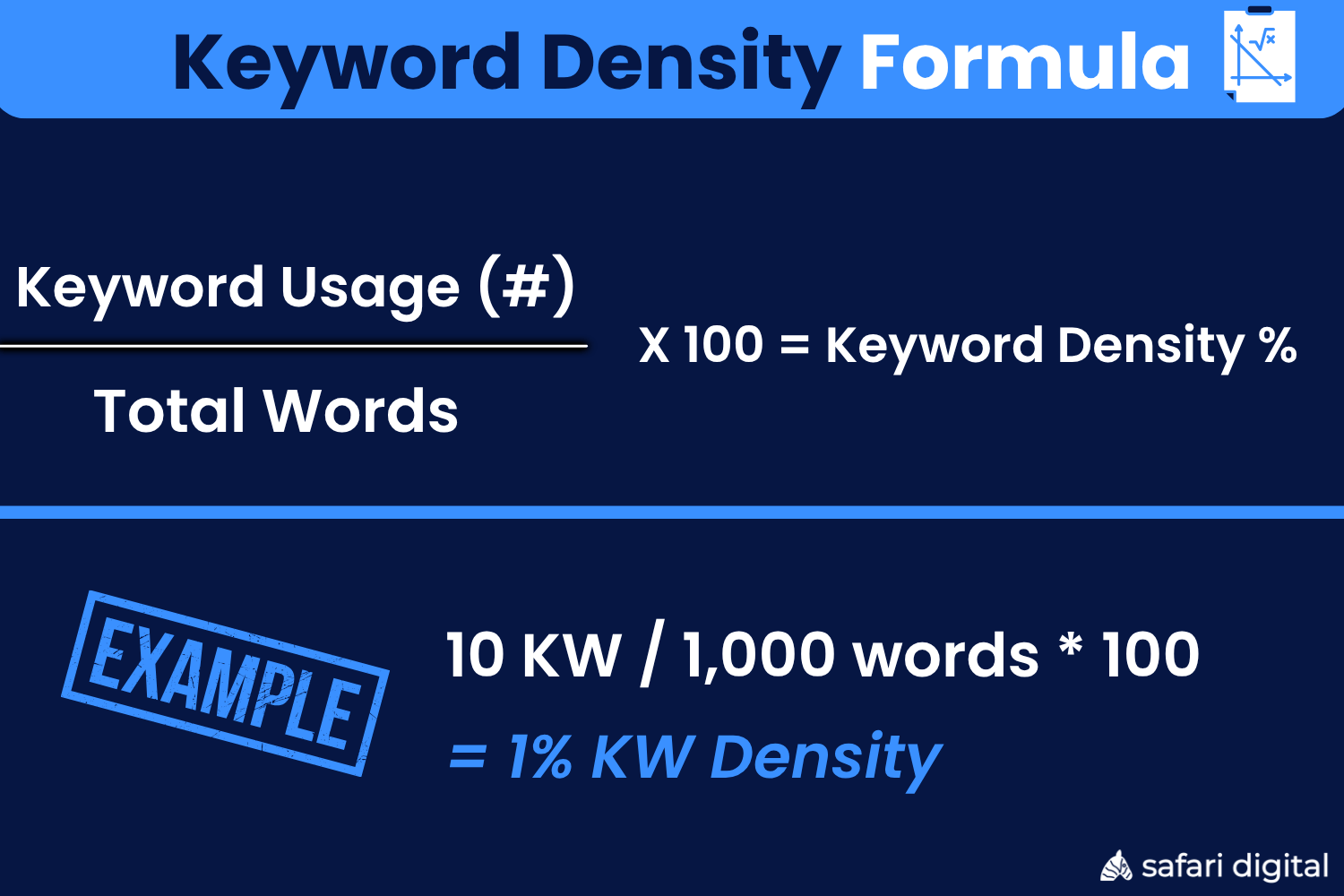
For instance, if a 1,000-word article uses its primary keyword 10 times, then the article would have a keyword density of 1% (10/1000 *100).
The keyword density calculation is very simple:
Keyword usage / total word count of the article = keyword density %.
Some SEOs and content specialists believe that keyword density can be used as a guide for keyword usage in an article. Some believe that by adhering to a keyword density % they will improve SEO performance.
Is keyword density an SEO ranking factor?
No, keyword density is not an SEO ranking factor.
Over the years, there has been discourse in the SEO community that seemed to believe that there was an “ideal keyword” density ratio. There is no truth to this and Google have been clear about this for a very long time.
Google Published the below video titled “What is the ideal keyword density of a page?” on the Google Search Central YouTube back on 18 Aug 2011 in Which Matt Cutts explains the premise of Keyword Density and dispels the myth:
“So if you think that you can just say, I’m going to have 14.5% keyword density, or 7%, or 77%, and that will mean I’ll rank number one, that’s really not the case. That’s not the way that search engine rankings work.”
Matt Cutts further explained that focussing on keywords instead of content can lead to compromised content and negative implication for SEO:
“And then what you’ll find is if you continue to repeat stuff over and over again, then you’re in danger of getting into keyword stuffing, or gibberish and those kinds of things.”
The 3-minute video is well worth a watch:
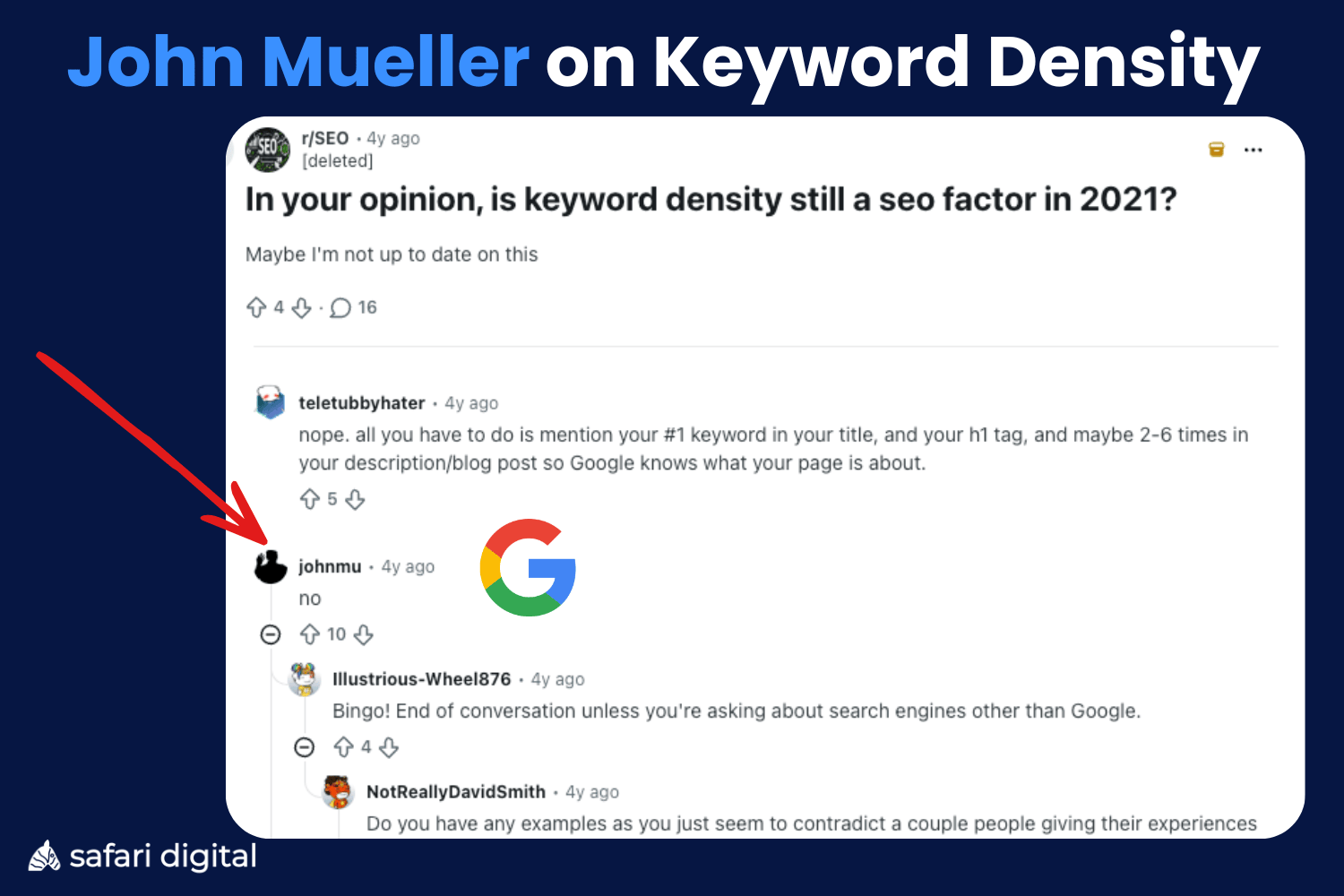
More recently, Google’s Search Advocate John Mueller confirmed that keyword density is not an SEO ranking factor back in 2021 in response to a Reddit Post titled “In your opinion, is keyword density still a SEO factor in 2021?” simply responding:
“no”
How SEO tools have perpetuated the myth of keyword density
It has to be said that mainstream SEO tools have played a key role in perpetuating the idea of an ideal keyword usage ratio.
Yoast, the most popular SEO plugin for WordPress websites for instance, continues to provide a red, orange, green light system for hitting key on-page metrics. One of those is keyword usage. Fall short of the mark and you’re told that you need to insert your keyword an extra X number of times until you get that dopamine inducing green signal.

The truth is that this system wildly oversimplifies how search engines read content. In reality, you could have 1,000 words or Lorem Ipsum interwoven with using your target keyword and still get that green light from Yoast.
Would it rank on Google? Of course not.
Are keywords still important for SEO?
Yes – keywords are still important for SEO.
Understanding keywords and using them (where appropriate) is still an important part of SEO.
The reality is that Google has become so good at interpreting context and semantics that you don’t necessarily need to use your exact keyword to rank for it. You could use similes or even provide enough context through your content that you don’t need them to rank.
The focus needs to be on creating content that is relevant to the keyword – not simply using it a set number of times throughout the content.