The March 2026 update came hot on the heels of the March Spam update which was announced on the 24th of March and wrapped up just 19h30m later on the 25th March.
Table of contents
The March 2026 core update was the first core update since the December 2025 core update which started on December 11 and lasted for 18 days causing widespread fluctuations to the search results.
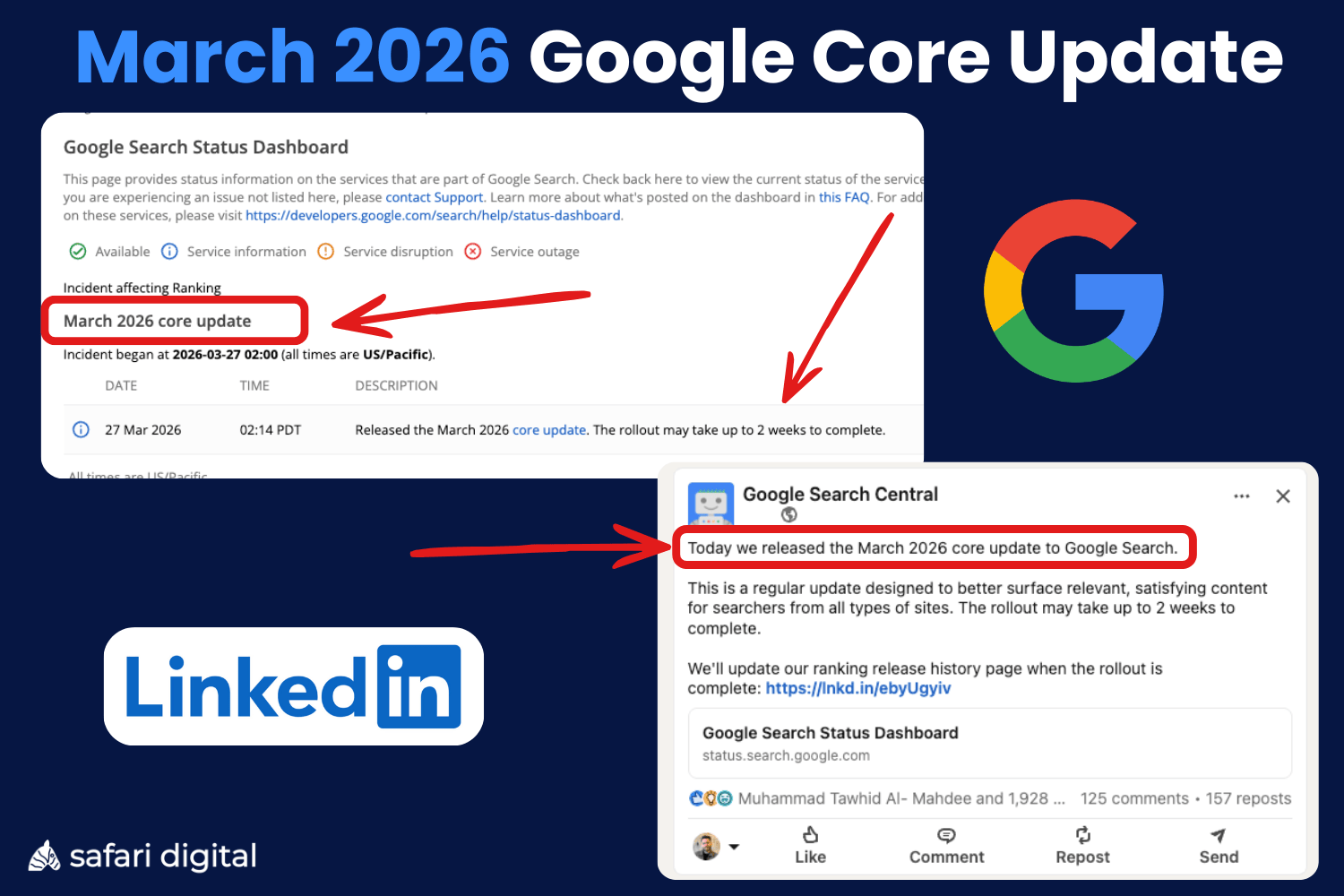
The March update was originally announced through the Google Search Central LinkedIn account:
Today we released the March 2026 core update to Google Search.
This is a regular update designed to better surface relevant, satisfying content for searchers from all types of sites. The rollout may take up to 2 weeks to complete.
We’ll update our ranking release history page when the rollout is complete:
The update was also confirmed on the Google Search Status Dashboard where it was confirmed that the updated started on 27 March 2026 at 02:14PDT with the following description:
Released the March 2026 core update. The rollout may take up to 2 weeks to complete.
March 2026 Google Core Update Key Information
General notes on the March 2026 Google Core Update
As mentioned, the March Core update came hot on the heels of the March 2026 Spam update. Interestingly, when compared to the August 2025 Spam update, the March spam update was incredibly sedate.
Having been witness to Google updates for years now, the best correlation that we can draw is that we tend to see a mild update followed by a very bumpy one. While there are no hard and fast rules here, it would be remiss not to point out this correlation that we have seen over the last few years.
Not all updates are bumpy and many of them tend to be felt in the weeks and months that follow. That said, whenever we get a particularly disruptive Google update, we often see a relatively sedate one to follow. Based on recent history and the fact that the March Spam update was rather sedate, we would not be at all surprised to see a very volatile few weeks during this update.
Recap of what happened in the March 2026 Google Core update
Recent History of Google Core Algorithm Updates